
Month: August 2018

  • GCSE Failure – It Gets Better!

    GCSE Failure – It Gets Better!

    If you’re feeling a bit low after disappointing GCSE results this week, don’t despair! Educational progress and aspirations need not stop with GCSE failure. I can tell you from personal experience that in hindsight, getting tripped up by my first attempts at GCSE exams was one of the best things to have happened to me.

    As some of you know, my sights were set on being a cricketing superstar and that’s where I put my effort and focus. As a result, my GCSE grades were disappointing at best.

    To cap it off, not only had I flunked my GCSEs, but it was clear that I wasn’t going to join the pantheon of cricketing greats either.

    A year of resits later and I was back on track. I had the good fortune to meet an inspirational tutor who set me on my current path. Fast forward several years and I’d successfully passed through Manchester University before emerging from Cambridge with a PhD.

    This was an unthinkable outcome when I opened those first GCSE results and felt crushed!

    When I look back, the combination of refocusing my energy and attention away from cricket and into my studies, and the support of a great tutor, was a life-changing turning point for me. He showed me a way forward and inspired me to see and fulfil my potential.

    GCSE failure first time around really isn’t the end of the world. It will no doubt feel disappointing that so much hard work seems to have been for nothing at this moment in time. Or it may confirm that more work was needed to hit the mark.

    Either way, it’s an opportunity to learn from the experience, to reset and to go again. And if, like me, you’re fortunate enough to have the support, guidance and determination to succeed, you’ll no doubt get those desired grades next time around.

    For me, there is no such thing as GCSE failure. We have to turn it into a positive experience. There is no point dwelling on negativity for it serves no purpose. Interestingly, when you move on and pass A Levels, nobody will care about the resit at GCSE, including you!

    If you’re wondering about next steps and how to move forward, or would simply like some advice, do feel free to contact me and I’ll be delighted to help you.

  • Turning Talent into Gold

    Turning Talent into Gold

    The recent European Athletics Championships, held in Berlin recently, delivered some amazing personal and team performances. While there’s a lot to be said for the correct focus and mindset to conquer the nerves of the big stage, the successes we witnessed were all based on thorough and lengthy planning and application. Turning talent into gold is often a long road, and in many ways, it mirrors our journeys to academic success.

    Dina Asher-Smith achieved a stunning 3 gold medals at the Championships at the age of just 22. It may be easy to think this is someone for whom success just happened, or that winning gold medals for sprinting is all about the last 10 metres or so. However, that’s far from the case. In fact, Asher-Smith has been involved in competitive sport for many years already, having begun racing whilst at primary school.

    She later joined Blackheath & Bromley Harriers Athletic Club, where she is still a member. In a recent interview, her coach shed some light on Dina’s rise to success. Having arrived at one of her earliest club sessions, people thought she was too small to compete. That was, until she won her first event, which was cross-country.

    And so the story began, where natural talent and no small amount of good genetics have combined with consistent coaching, effort, training and improvements, to produce one of the greatest performances British athletics has seen.

    A quick Google search will show you that the list of Asher-Smith’s sporting achievements is a long one, as a child, teenager and as an adult. For those that know her, this comes as no surprise.

    What many people may not know, is that as well as focusing on her athletics career and all that goes with developing and sustaining sporting excellence, Asher-Smith also achieved a BA (Hons) from Kings College London in 2017.

    This is clearly someone prepared to put in the work to achieve the desired outcome in her chosen endeavours!

    Earlier I referred to parallels between sporting excellence and academic success. This is because great exam results and gaining entry to schools of choice or one’s desired university aren’t built upon effort expended in the previous term or two.

    Just like Asher-Smith’s athletics career, the foundations for academic success are built over time and with continuous application, dedication, persistence and high-quality teaching.

    Each and every year, I am approached before exams by anxious parents looking for support. By then it’s often too late to provide meaningful support. Whilst it’s possible, with the right tutor and structure, to revise an entire curriculum in a short timeframe, teaching huge swathes of material and ensuring it is absorbed through testing recall and reasoning is another matter entirely.

    With this in mind, I urge any parent who may considering private tuition to do so as part of a long-term plan for success. Just as I do not advocate last minute cramming, with few exceptions, last minute tutoring can also be a lost cause.

    Planning for academic success should of in school years and not terms. If one does not wish to leave results to chance, or to risk the perils of anxiety caused by a lack of preparedness, it’s never too early to speak to an appropriate tutor.

  • Keeping kids and teenagers amused this summer

    Keeping kids and teenagers amused this summer

    We’re now well into the summer holidays and you may already be wondering about keeping kids and teenagers amused this summer.

    While it’s probably been refreshing not to have to dash around for the school run, or repeatedly ask your teenager to get out of bed, the summer routine may have already lost some of its shine.

    It can be lovely to have the kids home, but of course, when they’re home, they seem to be everywhere. Your home may not yet be free of the pain of stepping on Lego, or you may have entire rooms which are commandeered by zombie gamers. Your sofa, coffee table and floor space is overtaken by goggle-eyed Xbox or PS4 warriors, talking strategy with friends online as they shoot everything that moves, or appear to shoot it until it does.

    Whatever happened to a good old game of Asteroids on Atari I wonder?

    If you have younger children, they’ll likely be claiming to have exhausted their playthings (they haven’t) and are now relying on you as their main source of entertainment. When not hungry and demanding sustenance of course!

    So, what are your options for keeping kids and teenagers amused this summer?

    Well, here are my top suggestions, some of which are tried and tested favourites, while others are in reserve until my own children are older:

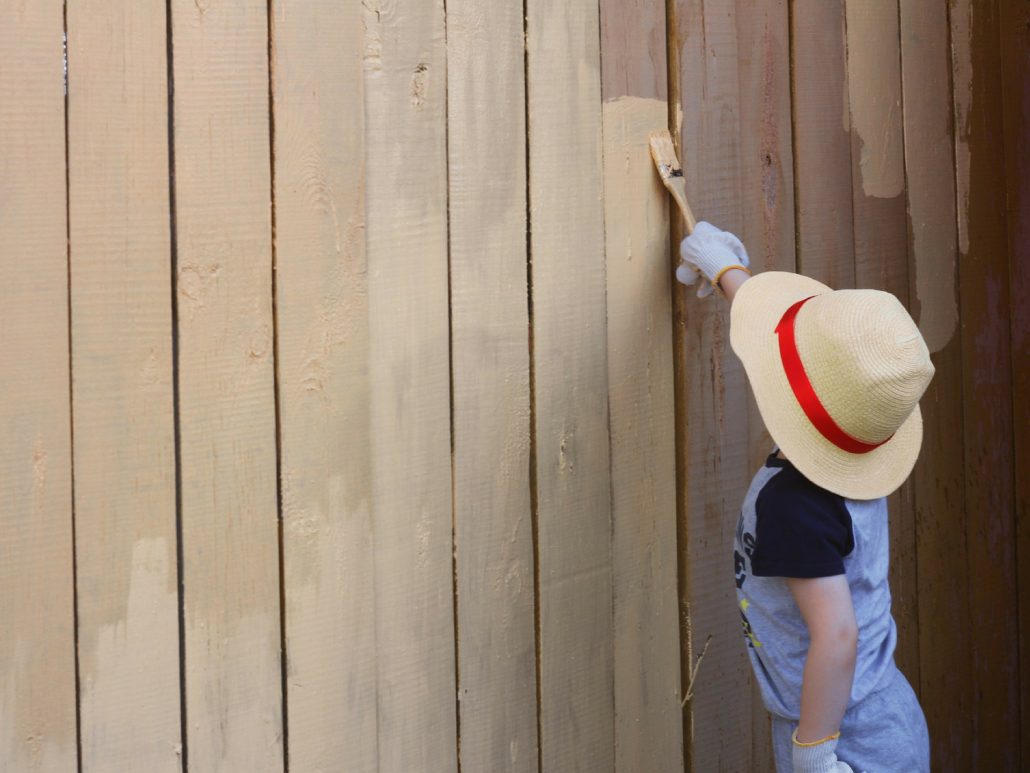
    • An outdoor project. From painting the fences to creating a new vegetable patch, or just about anything with a contrasting before and after effect. This provides an energetic outdoor pastime, whilst getting away from gadgets, phones, TVs and gaming consoles.
    • Just get outside. Plan some walks or trips to some of the big parks or even along rivers and canals. There’s so much to see and talk about, whilst getting plenty of fresh air and exercise.
    • Go to new places, exhibitions and events wherever you live. If you’re in London, there’s plethora of things to do to suit every budget. Many of us don’t fully explore our own environments these days and if you’ve done that, why not check out a new town or city?
    • Organise play dates and/or sleep overs. Most kids and teens love these and it’s a win/win for all concerned isn’t it? Lightened load at one end, before the favour is (hopefully) returned next time.
    • An indoor project. I’m not going suggest we let 7 year olds run amok with the gloss! Rather, I was thinking more of a collaborative clear out and tidy up. We all have just so much ‘stuff’ these days, much of which we rarely see, use or wear. Why not find new homes for these things? There’s the option of a garage sale, which is always great fun and a chance to grow some negotiation and haggling skills! Or why not simply donate excess or unwanted items to charity shops or offer for free on some of the many ‘freecycle’ or buy & sell forums and pages?
    • Have some downtime. Sometimes it’s good to just be. Whether it’s a duvet day binging on Netflix or family movies, it can be hard to beat some relaxed family time. Arguments and the never-ending requirement for refreshments aside, of course!

    These are just some of my favourite ways for keeping our kids entertained during the long summer holiday, which we fit in around our time away. The main point is to try to enjoy the time, no matter how fractious is may get or how exhausting it may feel.

    Before we know it, they’ll be all grown up!

  • The Doctor Shortage

    The Doctor Shortage

    Unless you’ve been on an extended news sabbatical, you’ll know that the UK is experiencing an extremely serious shortage of doctors. The doctor shortage isn’t necessarily new news, but it’s getting worse, with Brexit making it harder still to fill vacant positions.

    With a lack of international talent, we need to be producing our own doctors, and fast. If we are to fill the pipeline with worthy candidates, we must be educating our brightest students in the Sciences to the highest standards.

    Of course, there are other routes to medicine, which we will come on to later. However, by far and away the most common route is directly from A Level to Medical School.

    According to the British Medical Association (BMA), Medical schools will generally require candidates to have Chemistry at A Level, and often A Level Biology as well.

    One other science subject is frequently required, such as Physics, or Mathematics. A high A Level grade in a non-science subject will usually be accepted as a 3rd A Level.

    It’s also worth noting that the majority of Medical schools will not accept A Level general studies, and an increasing number will also not accept A Level critical thinking subjects as relevant qualifications.

    As you can see, getting Science qualifications at high grades really does smooth the way forward!

    However, while there are numerous other routes to becoming a doctor, there is one in particular which I believe will become more common in the immediate terms: Graduate Access to Medical School Admission Test, otherwise known as GAMSAT.

    With so many graduates struggling to find the employment they studied for, the GAMSAT route provides a new range of opportunities.

    GAMSAT offers graduates an opportunity to go to Medical school to those who do not have the requisite Science A Levels as outlined above.

    As someone who has studied for, and passed the GAMSAT exam, I can tell you it is not for the faint of heart.

    GAMSAT is designed to rigorously test a candidate’s reasoning skills as well as all round intellect. This is amplified by the reduced learning time-frame of around 6 months.

    GAMSAT is divided into 3 sections to assess capabilities of:

    • Reasoning in Humanities and Social Sciences
    • Written Communication
    • Reasoning in Biological and Physical Sciences

    If one is seeking graduate entry to Medical school or considering a career change, I can personally recommend this option to those that are prepared for the task ahead. I am sure that if more people were aware of the GAMSAT option, it would go a long way to solving the doctor shortage.

    From a preparedness perspective, this is another area where seeking the help of a private GAMSAT tutor to ensure your significant investment of time is worthwhile.

    Each year I successfully tutor and mentor GAMSAT candidates to successful outcomes.

    If you would like more information, please get in touch via the Contact page, by emailing me directly or by calling 0207 686 4307.

  • Friendship Groups for Enhanced Learning

    Friendship Groups for Enhanced Learning

    This year MST has introduced group tuition to our private tuition services portfolio. One of the concepts that’s proved successful has been the idea of friendship groups.

    I thought it would be a good idea to clarify what friendship groups are and are not, and how they differ from regular group tuition.

    As the name suggests, these learning groups are made up of friends who also class mates. This arrangement works particularly well for 3 key reasons:

    • It opens the door to private tuition when 1 to 1 tuition is not possible
    • Friendship groups put students at ease, especially younger students, as they are with friends
    • Each student is studying the same syllabus, enabling a deeper investigation of common subject matter

    When I am approached by a parent for group tuition, I will often suggest a friendship group for the reasons outlined above. It is at this point, that the onus moves to the parent to help find other students that may also like to participate in additional tuition.

    This is usually easy to achieve once somebody makes the first move!

    With regular group tuition, a student is enrolled in a tuition group made up of students of similar age and perceived ability, although of course they may not know their new learning colleagues in advance. As daunting as this can be, it also provides an ideal scenario to gain fresh perspective, and to make new friends.

    Friendship groups engender a fun learning environment. There is still in-depth focus, and the relaxed atmosphere encourages more questions, which in turn accelerates learning!

    Another side-effect of this enhanced learning environment is the confidence instilled in each student. This is something that happens surprisingly quickly and continues to serve the student in all walks of life.

    And, the fact is, some students simply do better in a peer group than in a 1 to 1 setting, for a variety of reasons.

    I know it’s early August, but slots do tend to be snapped up quickly. Therefore, if this is something that’s of interest to you, please get in touch to reserve your slot.

    You can contact me via the Contact page, by emailing [email protected] or by calling 0207 686 4307.

Cookies on this site
We only use the essential cookies the site needs to work. Our visitor statistics don’t use cookies. Privacy notice

OK